
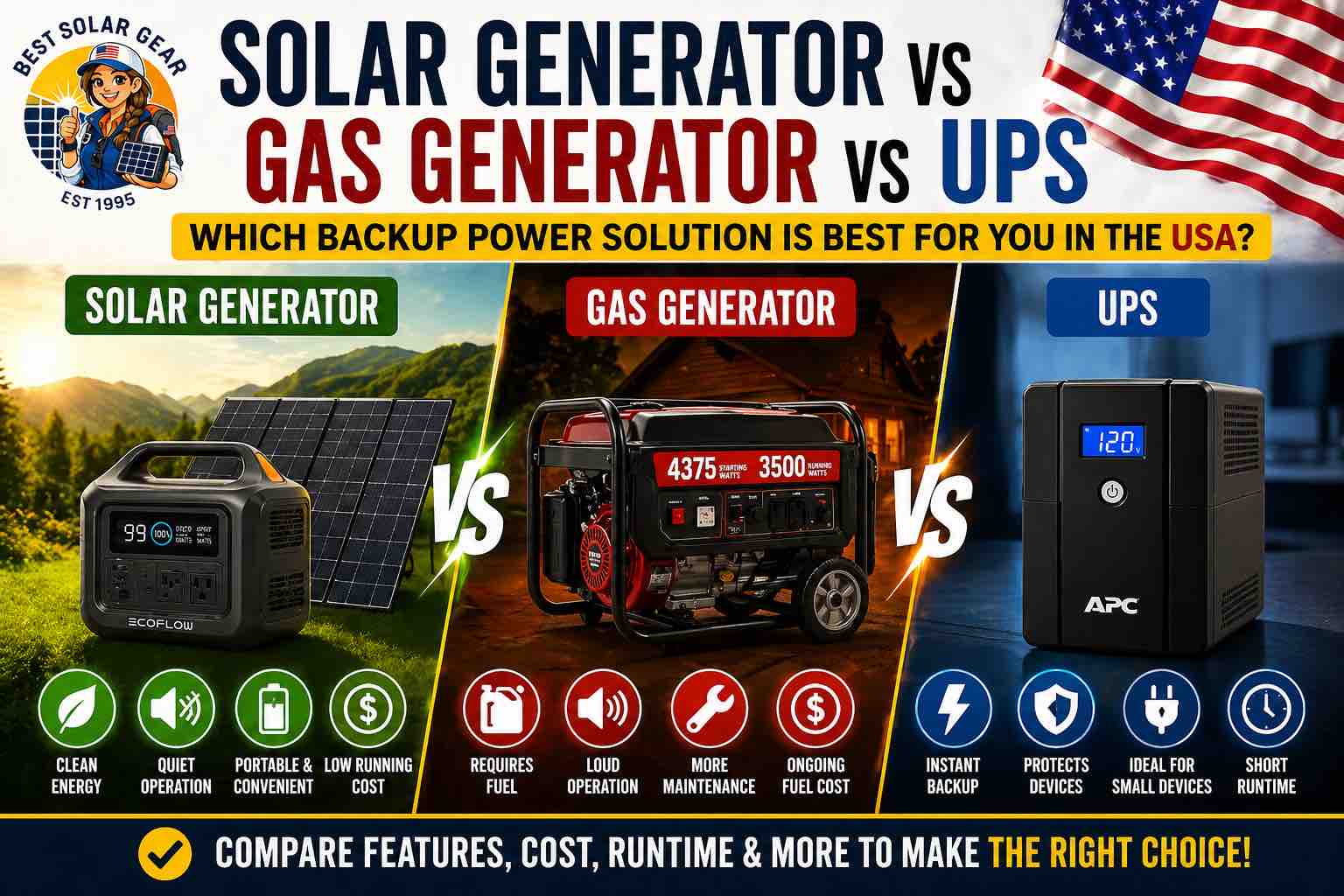
Today we will see the major difference between Solar generator Vs Gas generator vs UPS. Even though these are very basic concepts, there is so much confusion in mind of people. So, let’s takle it today in this thorough blog where we will understand each of this term in detail and do comparative analysis and study of each.
Introduction
“Energy is the foundation of modern life-Without it, everything stops”
Energy is the momentum of modern life. We need some form of energy generation to leverage all the technological advancements. Without a clean energy source, our life will come to a standstill. So, we must have a backup solar power generation device like Solar generator or gas generator which can be used in case of power outage, emergency situations or during outdoor camping purpose.
Energy is energy. We cannot say one energy source better than the other. It totally depends on your use case and options available to you. So, we will give you pros and cons of each energy source (solar generator Vs Gas generator) so that you can select the best for your use case.
What is Gas Generator?
- Instant power generation on demand
- Can refuel in minutes
- Carbon monoxide and CO2 emissions
- Large sound and not recommended for indoor
To the point:
Gas generator consist of an engine that generates electricity instantly by burning fuel like gasoline or diesel. It can produce continuous power as far as fuel is provided to generator.
A gas generator is conventional method of power generation using gasoline or propane or diesel. It is no doubt best generator for high power generation, but its carbon monoxide emissions, noise levels and indoor limitations has made it less popular for apartment and household users who need a power backup for home.
It is obvious choice in areas where sunlight is low and needs immediate energy generation for high capacity appliances.
What is Solar Generator?
- Renewable source of energy
- Excellent for house backup
- Clean energy and silent operation
- Portable and low maintenance
- Needs decent sunlight
To the point:
Solar generator consists of battery which is charged via solar panels (solar energy). This stored energy in battery is later used to power home appliances in case of power outage or power failure or camping.
In last decade, the technological advancement in solar domain is phenomenal and is improving every day. Solar energy production was never so efficient as it is today.
So, solar power generators upto 12,000Wh battery capacity are present in brands like Ecoflow, Jackery. This capacity is sufficient to power complete home in case of emergency situations.
Why Americans are switching to solar option?
Americans are switching to solar option mainly due to following reasons:
- States like Texas, California, Florida face regular outages. Storms, hurricanes and wildfires cause frequent grid failures. Solar generator provides a clean and emergency power backup.
- Solar generators are silent and neighbour friendly. So, perfect for apartments and homeowner associations.
- No emissions and cleaner fuel (important for eco conscious states like california)
- No fuel, no dependency, no stress
- Long term savings on power
- High technological advancement in solar tech
- Supports portable lifestyle (outdoor camping, RV)
Multiple solar power options in US Market
Multiple solar power options are available in USA Market:
- Solar generators (Portable power station and generators)
- Home solar battery (Powerwall type)
- Rooftop solar panel systems
- Grid tied solar system
- Hybrid solar system
- Offgrid solar system
- Solar + generator Hybrid setup
Americans are switching to solar because its cleaner, safer, quieter and reliable renewable energy during power outage and emergencies
Solar Generator Vs Gas Generator
Let us now see detailed comparison of Solar generator vs Gas Generator. We will do this comparison on real life features and scenarios for better understanding. This will help you find best generator for your use case.
We tested solar generator vs gas generator in real world scenarios to come up with this details comparison guide.
| Feature | Solar Generator | Gas Generator |
| Energy Source | Solar panels, wall AC outlet, car- Stored in battery for further use | Gasoline, propane or diesel burned in engine for direct power |
| Core mechanism | Li-ion /LiFePO4 battery + inverter supplies stored power | Internal combustion engine (IC Engine) drives alternator to produce power |
| On demand generation | No on demand (It needs to store solar energy in battery first) | Instant power generation on demand (Fuel must) |
| Typical capacity | 300Wh to 5000Wh, comes with expandable setup | Depends on fuel and tank capacity. Typically high capacity generators |
| Output capacity | Comes with surge capacity upto 6000W (roughly 2.5x times) | Can handle high surge for heavy loads (depends on generator capacity) |
| Runtime | Limited by battery, extended via solar input | Continuous as far as fuel is supplied |
| Recharge time | Solar panels: 4-5 hours AC Wall charging: 1-2 hours (Fast charging) | Refuel in minutes |
| Fuel dependency (US Scenario) | None (sunlight/grid) | High fuel shortage during hurricane or wildfires can limit use |
| Noise level | Silent (0 dB) | 60-90dB (Loud operation) |
| Emissions | Zero emissions | CO2 + exhaust, not allowed indoors |
| Safety concern | It can operate safely indoors | Carbon monoxide risk, good for only outdoor use case |
| Maintenance | Minimal maintenance | High maintenance (regular oil changes, spark plugs, filters) |
| Startup and ease | Easy startup, plug and play | Electric start, fuel handling required |
| Power Quality (THD) | Clean sine wave (safe for electronics) | Conventional: Higher THD |
| Voltage stability | Very stable as it is inverter controlled | Varies based on inverter model |
| Portability | Portable as its light weight (Typically 5 to 30kg) | Heavy (20-100kg), wheels often needed |
| Scalability | Expandable due to solar arrays and parallel expansion possible | Limited scalable, need larger units for larger power output |
| Weather performance | Performance drops during low sunlight days | Works in all weather situations, must be dry and ventilated |
| Use in apartments/Condos (US) | Ideal for indoor | Not suitable due to noise and exhaust |
| Best Use Cases | Home backup, RV/Camping, portable use cases | Construction, whole home backup, long outages |
| Appliance Support | Almost all home appliances including AC and microwave oven (depends on capacity of solar generator you choose) | AC, heaters, pumps, washers, full home loads, etc |
| Expansion | Can add parallel batteries in solar generator for larger backup time | Depends on generator capacity, but some units support parallel kits |
| Operation Cost | Zero operation cost if solar option opted | Ongoing fuel + maintenance cost |
| Upfront product cost (USA) | $500 to $3000 (depends on brand and battery capacity) | $300 to $1500 for portable units |
| Total cost of ownership | Lower cost considering long term usage (no fuel) | Higher long term cost (fuel + maintenance) |
| Energy independence | Solar dependent | Heavily fuel dependent |
| Outage readiness | Must be pre-charged with solar panels or fast AC charging in case of emergency | Ready anytime if fuel is stocked |
| Grid interaction | Off grid friendly | Independent of grid, but over dependence on fossil fuel |
| Storage | Easy to store indoors | Must be stored safely with fuel and emission considerations |
| Lifespan | Depends on battery cycles (typically 4000 full charging cycles) | Engine hours (Maintenance place crucial role) |
| Resale Value | Good for popular brands, can sell parts separately as well | Good if well maintained |
| Brand ecosystem | EcoFlow, Jackery, Bluetti (emerging new tech) | Honda, General, Champion, wESTINGhouse |
| Environmental regulations | Compliant everywhere, zero carbon footprint | Increasing restrictions due to emissions and noise in some states |
Decision making: Which one should you choose?
Given below table will directly help user to buy best generator for them if they are confused betwen Solar generator vs Gas generator vs UPS.
| User type | Solar Generator | Gas Generator |
| Apartment users | Best Choice | Not allowed (due to noise and emission) |
| Home backup | Yes | Yes |
| Whole home backup | Good choice | Best choice if space is available to keep generator outdoor |
| Camping, RV, travelling | Perfect | Heavy and not handy |
| Emergency preparedness | Excellent | Heavy dependency on fuel |
| Running heavy appliances | Few solar generators designed for heavy appliances | Ideal for heavy load |
| Noise sensitive areas | Silent operation | Loud operation |
| Budget buyers | High initial cost, but no fuel cost later | Low initial cost but high fuel and maintenance cost later |
| Long term savings | No fuel cost | Expensive fuel over time |
| Indoor usage | Best suitableto day activitie | Emissions and too noisy |
| Our door camping | Best suitablet | Not portable |
So, now you have clear picture regarding solar generator vs gas generator in terms of use case and day to day activities.
What is UPS?
- Provides continuity during power outage
- Adds additional lavel of electric safety to appliances
- Backup time is too small
To the point:
UPS consists of a small battery backup that provides instant power to device when electricity goes out. It provides continuity in running home appliances for a short duration of time.
UPS does not produce power. It just provides short period continuity in case of power failure.
UPS stands for: Uninterrupted Power Supply. This itself is self explanatory.
UPS mainly is to avoid sudden stoppage in electrical appliances. It provides backup to appliances ranging from 5 min to 30 min. 0ms response time with small backup duration is characteristics of any UPS.
What is Inverter Generator?
To the point:
An inverter generator is a quite, fuel powered generator that produces clean electricity safe for all modern appliances
Solar Generator Vs UPS
Use case of solar generator and UPS is completely different. Still we will do detailed comparison between them to clear all your basic to advanced doubts.
UPS=Uninterrupted power supply (To maintain short term continuity in appliances in case of power outage)
| Feature | Solar Generator | UPS |
| Energy source | Solar panels, wall AC input, car charging | Wall outlet (grid electricity) |
| Core mechanism | Battery + Inverter setup to supply stored energy | Small battery backup with instant switchover |
| Purpose | Portable/ home power backup | Instant short term backup for electronics |
| On demand power | Needs energy stored | Needs pre charged battery |
| Typical capacity | 300Wh-3000Wh+ | Low capacity (100-800W typical) |
| Runtime | For hours (6 hours +) | 5-30 minutes typically |
| Backup activation time | 1-10ms | Instant (0 ms) |
| Primary use case | Home backup, camping, RV | Computer,, routers, office small devices |
| Noise level | Silent | Silent |
| Portability | Portable | Usually stationary use case |
| Outdoor use case | Yes | No |
| Expandability | Expandable | Not expandable |
| Battery Type | Lithium / LiFePO4 | Lead Acid or lithium |
| Emergency Situation | Good to power appliances during emergency | Very limited use case |
| Maintenance | Minimal | Minimal |
| Weather independence | Works anywhere | Depends on grid charging |
| Operational cost | Negligible | Minimal (only electricity) |
| Cost in USA | $500-$3000+ | $50-$300 |
| Data Protection | Decent | Excellent (No interruption) |
| Lifespan | 5-10 years (lithium) | 3-5 years (lead acid common) |
Smart users in USA don’t rely on one system, they combine all 3 based on need!
What is Home Battery (Tesla Powerwall and alternatives)
Home battery is nothing but a large size, fixed battery system which is installed in your house that stores electricity.
It is stationary whole home backup solution (not portable). At the time of installation, capacity of home battery is designed such that home becomes self sufficient in its power generation and usage. This home battery stores electricity from solar panels or the grid and powers your home in case of outage and emergency situations.
Key points:
- Stores solar or grid electricity
- Stationary, large capacity, permanent battery solar setup
- Automatic power supply during power outage and emergencies
- Works with rooftop solar systems
- Expensive but powerful system ($10k-$15k+ in USA)
Example:
In California, solar panels charge a Tesla powerwall during the day. And at night or in emergency situation, it powers all the home appliances to maintain power continuity.
Summary
We have seen detailed comparison of Solar Generators vs Gas Generators Vs UPS. Now, select best option based on your location, fuel availability, budget, renewable or non renewable choice, indoor or outdoor use case.
Also we need to understand there is no competition between them like Solar generator Vs Gas generator Vs UPS. Lets take 1 example:
We will take example of Mike Johnson, Texas who is using solar generator + Gas generator + UPS at his home.
- He has UPS which helps him to keep his laptop, wifi router on when power goes off. This gives him 15-20 minutes to complete and save his important work.
- His solar generator of battery capacity 6000Wh helps him to power his lights, TV, phone and other home appliances for 6-7 hours during the night hours. This provides silent and safe indoor operations.
- Gas generator is placed in garage which helps to power air conditioner, washing machine, etc and other heavy appliances during long outage hours and to run all home appliances on it (This need not be ran on daily basis. Only used when needed)
| UPS= | instant backup |
| Solar= | Silent daily power |
| Gas= | Heavy duty backup |
There is no one size fit for all. Best solar generator depends completely on your use case.