
Introduction
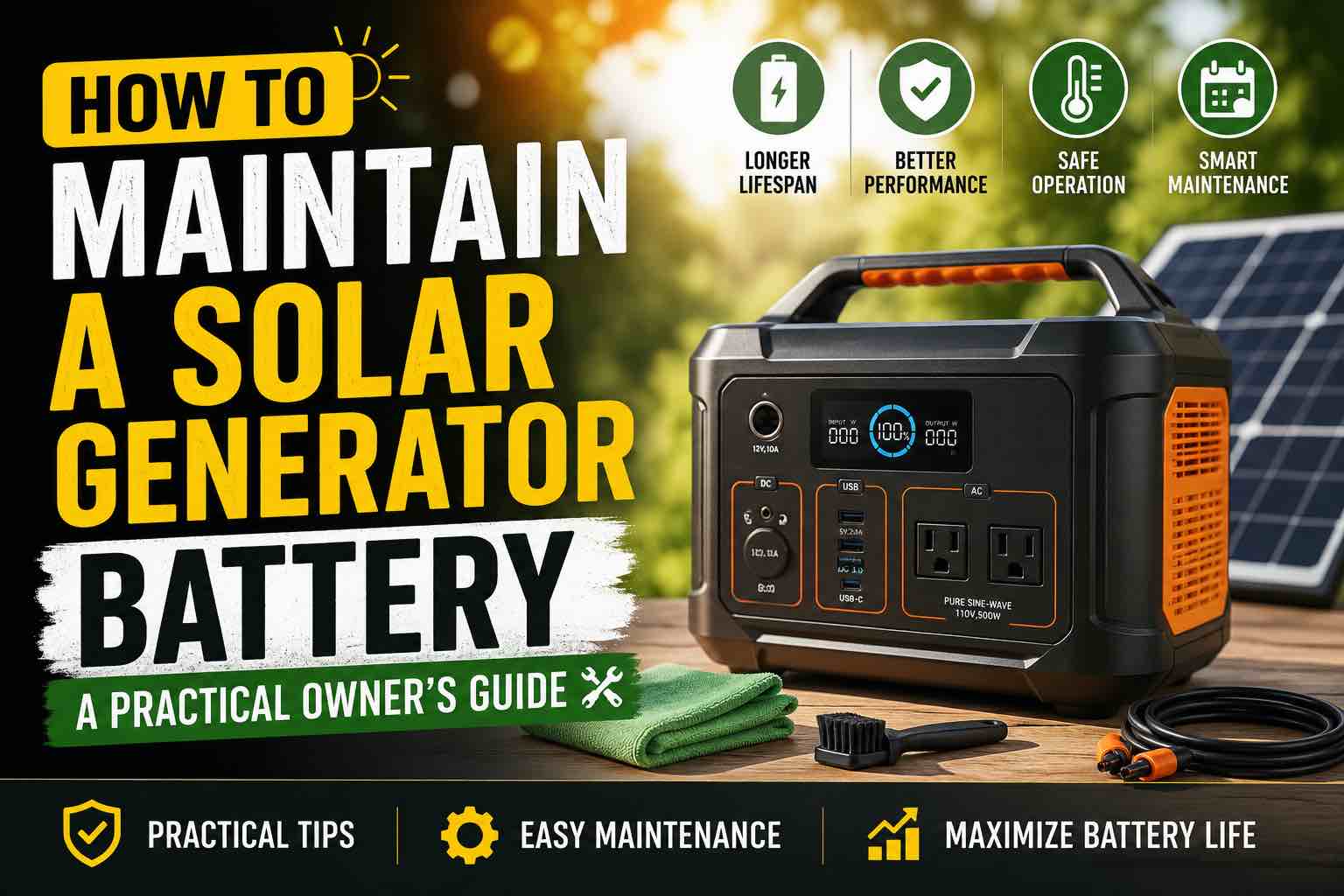
The battery is one of the most important parts of a solar generator. When properly maintained, it can last longer and provide reliable backup power. However, many people overlook simple habits such as proper charging, storage, and regular maintenance, which can shorten battery life. In this guide, we’ll look at some practical tips to help keep your solar generator battery in good condition and extend its lifespan.
This will be a practical owner’s guide where you will get actionable items on how to maintain a solar generator battery.
“Battery longevity isn’t built by one big action, its built by small things you do consistently”
Why Solar Generator Battery Maintenance Matters
The battery is one of the most important and expensive parts of a solar generator. When it is properly maintained, it can last longer and provide reliable backup power. However, improper charging and storage can reduce battery capacity. As a result, the generator may not run as long as it did when it was new.
Battery health affects how much backup power your solar generator can provide. A battery that is not maintained properly may take longer to charge and may not hold a charge as well as before. This can become a problem during power outages, camping trips, or other situations where you depend on backup power.
Many people focus on battery capacity, but battery condition also plays an important role in how long a solar generator can provide backup power.
Since a new battery can be expensive, proper maintenance is important. It can help extend battery life and support reliable backup power.
Avoid Deep Discharging Your Solar Generator Battery
Try not to let your solar generator battery drain completely. Using the battery until it reaches 0% can shorten its lifespan. It is a good idea to recharge the battery before the charge level gets too low. Many modern solar generators include battery protection features, but making a habit of fully draining the battery is still not recommended. Regular charging can help reduce unnecessary strain on the battery.
Most modern solar generators use lithium batteries, which generally last longer when they are not regularly drained to 0%.
To help the battery last longer, try to keep the charge level between 20% and 80% whenever possible.
| Battery Charge Level | Recommendation | Impact on battery |
| 0-20% | Avoid frequently | Increases battery stress and wear |
| 20-40% | Good | Safe for regular use |
| 40-80% | Ideal | Maximises battery lifespan |
| 80-100% | Fine when needed | Best before long trips or outages |
| 100% (long storage) | Avoid | Accelerates battery degradation |
(Keeping battery charging between 40-80% is one of the best tips to maintain solar generator battery)
Follow Proper Solar Generator Battery Charging Practices
Simple but effective practices:
- Use the charger recommended by the manufacturer when charging your solar generator. Using the wrong charger may affect battery performance.
- Many solar generators can be charged with solar panels or a wall outlet. Follow the charging instructions provided by the manufacturer to understand difference between AC socket charging and charging with solar panels.
- If you do not plan to use the generator for a long time, avoid leaving the battery completely discharged.
- Charge the battery occasionally, even when the generator is not being used. Avoid waiting too long to recharge the battery when the charge level gets very low. This can help maintain battery health and extend its lifespan.
Jack charges his solar generator every three months and keeps the battery at around 50% charge while it is in storage. Henry stores his generator for more than six months without checking the battery level. When they use their generators later, Jack’s generator works as expected. However, Henry finds that the battery has dropped to a very low charge level and no longer provides the same runtime as before.
Store Your Solar Generator Battery Correctly
If you will not be using your solar generator for a while, make sure to store it properly. Do not leave the battery fully discharged or fully charged for long periods. Keep the generator in a cool, dry place and away from direct sunlight. Avoid storing it in areas with excessive heat, moisture, or humidity, as these conditions can affect the battery. It is also a good idea to check the battery level occasionally while it is in storage. This can help prevent battery-related issues when you use the generator again.
For storage longer than one month, many manufacturers recommend keeping the battery around 50% charge rather than 100%.
William stores his solar generator in a cool, dry place and checks the battery level once in a while. Olivia puts her generator in storage and does not check it for months. When they need their generators again, William is ready to use his, while Olivia has to recharge hers first. Also runtime may get affected in her case
Check the Battery Level Regularly: Varies Case to Case
| Situation | Ideal Battery Level |
| Daily use | 40-80% (highly recommended) |
| Before a power outage | 100% |
| Camping or outdoor trips | 100% |
| Long term storage (1+ month) | 50-60% |
| Monthly storage Check | 40-60% |
| After Heavy Use | Recharge soon, avoid deep discharge for long time |
| Battery below 20% | Charge immediately |
| Extreme heat or cold | 40-80% |
Check the battery level every now and then, especially if you are not using the generator often. Avoid leaving the battery at a very low charge level for long periods. If the generator is in storage, make sure the battery does not become completely discharged. Most solar generators have a display screen, so checking the battery level only takes a few seconds. Doing this can help you know when the battery needs charging and help avoid unexpected power issues.
If the generator is stored, check the battery every 2–3 months and recharge it if the level drops below 30% to 40%.
Protect the Battery from Extreme Temperatures
Very hot or very cold temperatures can affect your solar generator battery. High temperatures may shorten battery life, while cold weather can affect battery performance. It is best to keep your solar generator in a cool, dry place whenever possible. You should also avoid leaving it in direct sunlight for long periods.
Most lithium batteries work well between 50°F and 86°F (10°C–30°C). Keeping the generator in temperatures above 95°F (35°C) for long periods may shorten battery life.
| Situation | What to Do |
| Generator left in hot car | Move it indoors or a shaded area before use |
| Camping in direct sunlight | Place the generator under a canopy or a temporary tent |
| Using it during summer | Keep at least 6-12 inches of space around the vents for airflow |
| Winter Camping | Store the generator inside your RV, tent because cold temperatures reduce battery efficiency. |
| Garage storage | Store the unit in dry, temperature controlled locations |
| Charging after freezing weather | Let the battery warm to room temperature before charging |
Keep Your Solar Generator Clean
Keeping your solar generator clean is an important part of battery maintenance. Dust and dirt can build up on vents, ports, and connectors over time. This can affect airflow and may prevent the generator from working properly.
If you charge your generator with a solar panel, it is also a good idea to keep the panel clean. For example, a 100W solar panel may generate less power if dirt or shade covers part of the panel, so it can take longer to charge the battery.
Along with your solar generator, solar panel cleaning is very important for high efficiency. Cool and clean solar panels will increase overall efficiency of your solar generator.
Use Your Solar Generator Regularly
Not using your solar generator for a long time can affect the battery. That is why it is a good idea to use it from time to time. You can charge a phone, laptop, or other small devices to keep the battery active. Long periods without use are not ideal for the battery. Regular use can help keep the generator in good working condition and ready when you need it.
Real Life example:
Mike owns a Jackery Explorer 1000 with a 1070Wh battery. He uses it for power outages at home and weekend camping trips. He usually recharges it when it gets to about 20% to 30% instead of letting it run all the way down.
If he knows he will not be using the generator for a few months, he stores it with the battery at around 50% to 60% charge and checks it every three months. He keeps it indoors where temperatures stay between 50°F and 77°F and avoids storing it in a hot garage during the summer, where temperatures can climb above 95°F.
To keep the battery in good condition, Mike powers a 60W laptop and a 10W Wi-Fi router for about four hours once a month. Together, those devices use roughly 280Wh of energy. This gives the battery some regular use and helps ensure the generator is ready whenever backup power is needed.
Common Solar Generator Battery Maintenance Mistakes
Some people let the battery drain to 0% too often. Others leave the generator unused for months without charging it. Storing the generator in direct sunlight is another common mistake. Using the wrong charger can also affect the battery. Leaving the generator in very hot or very cold conditions may cause problems as well. Small mistakes like these can affect the battery and reduce its lifespan.
Taking care of your solar generator battery does not have to be difficult. Charging it regularly, storing it in the right place, and avoiding extreme temperatures can help the battery last longer. These simple steps can keep your generator ready when you need backup power. Regular attention to the battery can help it stay in good condition for longer.
Hopefully all your doubts on how to maintain a solar generator battery for long lifespan are clear now.
Don’t leave your solar generator in parked car. On a hot summer day, interior temperatures can exceed 140 degree F (60 degree celsius) in just few hours which can reduce battery life and raise serious safety concerns
Frequently Asked Questions (FAQs)
If you use your generator regularly, charge it as needed. If it stays in storage, check the battery level from time to time and recharge it when necessary.
This depends on the model. It is always a good idea to check the manufacturer’s instructions before leaving it plugged in for long periods.
A cool and dry place is usually the best option. Try to keep it away from direct sunlight and moisture.
Yes. Very hot or very cold temperatures can affect battery life and how the generator works
Avoid draining the battery to 0% too often, store the generator properly, and charge it regularly.
Yes. Checking the battery level from time to time can help prevent the battery from becoming completely discharged.